
How to increase traffic to your website (Fix what's stopping it)
Introduction
I remember there was a day I published more blogs and waited for quick results.
I’ve done everything from writing the content, structured headings, and even optimizing for SEO. And I was expecting traffic too.
But nothing happened.
No traffic.
No clicks.
Just silence.
At first, I thought that more blogs would get me more traffic. But days passed there was no real traffic.
That’s when the real question hit me:
Why is my website not getting traffic, even after doing everything?
Many have faced this situation. And they think that the content that they are publishing is enough.
In this guide, you’ll learn:
- Why your blog is not getting traffic
- What mistakes might be holding you back
- And most importantly, how to increase traffic to your website with the right strategy
Because once you fix all the problems. You don’t want to chase the traffic; it will eventually appear.
Why your website is not getting traffic
Most websites fail not because of the effort but because of the lack of direction.
You're publishing content but getting no results
You spend most of the time researching topics, writing blogs and optimizing them, and publishing.
But when you check the data:
- Impressions are low
- Clicks are almost zero
- Traffic is not growing
It is very hard to see the results.
You're targeting keywords without a clear strategy
People choose their topics on their own and do not consider what people are actually searching for.
This can lead to:
- Targeting highly competitive keywords
- Missing out on long-tail opportunities
- Writing content that never gets discovered
Your content doesn't match search intent
You can choose the perfect keyword, but your content will not be.
For example:
- Users want only the solutions, but the blog you are writing will provide them with explanations
- Users may need a practical guide, not something generic
This mismatch reduces both rankings and clicks.
You're ignoring click-through rate (ctr)
Your blog can appear on Google, but that doesn’t mean people will click on it.
This happens when:
- Titles are not compelling
- Meta descriptions are weak
- Your results don’t stand out
This is why many beginners face the issue of impressions but no clicks.
You expect traffic too quickly
The biggest misconception is that publishing more blogs will bring more traffic. But SEO doesn’t work like that.
- Google takes time to understand your content
- Rankings fluctuate in the beginning
- Traffic builds gradually
All these problems lead to one result:
No traffic for your website. And most of them lose their hope. But the good part is that when you find the problem, it is easier to solve it.
Why you can trust this
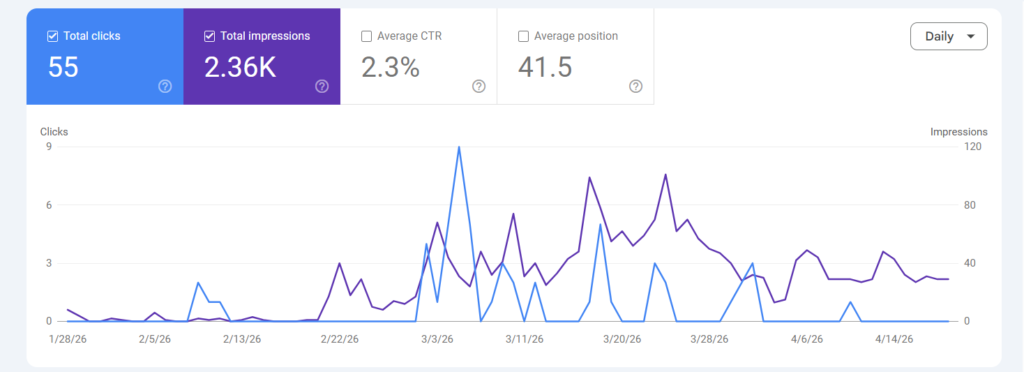
This is not a theoretical guide or something copied from multiple sources.
This is based on my own experience of trying to grow the new website from scratch.
At first i too had the same problems:
- Not getting traffic
- Very low clicks despite impressions
- Unable to understand the problem
And I realized that:
The problem was not the effort but a clear strategy.
So instead of guessing, I started:
- Analyzing my blog performance using Google Search Console
- Studying what was working and what wasn’t
- Improving titles, content structure, and keyword targeting
- Focusing on what actually brings traffic instead of just publishing
This mindset helped me to understand:
Traffic doesn’t come from writing more; it comes from fixing the right problems.
And that’s exactly what this blog is about.
Not just “How to increase traffic to your website” in theory…
But how to identify what’s stopping your growth and fix it step by step.
Why your website is not getting traffic (And how to fix it)
Reason 1 : Wrong keyword strategy
Targeting the wrong keywords will not get you enough traffic.
Many beginners go after:
- High-Volume keywords
- Broad topics
- Highly competitive queries
As a result, their content never ranks.
Fix:
Instead of chasing volume, focus on:
- Long-tail keywords
- Specific problems
- Beginner-focused queries
For example, target something specific instead of a broad term. And also what people are actually searching for.
Many of these issues start with poor keyword selection, which I’ve explained in detail in this guide on SEO keyword research for beginners.
Reason 2 : Not matching search intent
Your keyword can be right, but if the content does not satisfy the intent, it might affect the traffic.
For example:
- The user wants a solution – the blog gives only theory
- The user wants steps – the blog gives only the general advice
This can create a gap between the expectation and the content.
Fix:
- Analyze top-ranking pages
- Understand what type of content is ranking
- Structure your blog accordingly
Reason 3 : Poor on-page seo
The main issue is only about how the content is presented.
Common issues:
- Unclear headings
- Poor structure
- No proper keyword placement
These are harder for users and search engines to understand the content.
Fix:
- Clear H2 and H3 headings
- Maintain readability
- Keywords should be placed in headings, titles, and content naturally.
Infact, these are some of the same problems covered in SEO keyword research mistakes, where I break down why beginners struggle to rank.
Reason 4 : low ctr (click through rate)
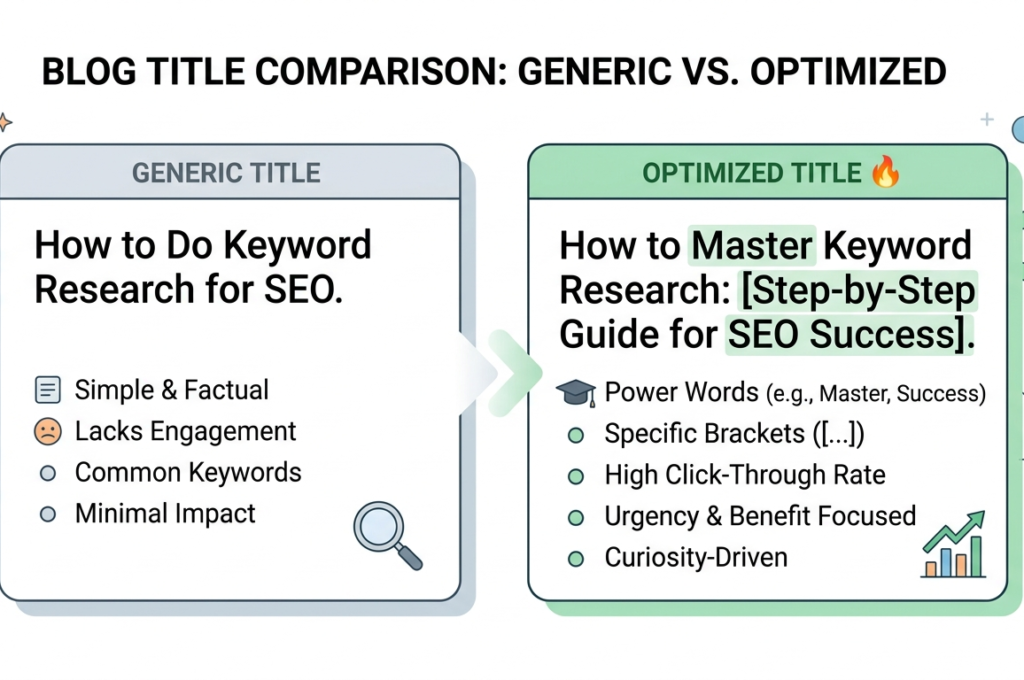
Impressions might be high, but no clicks.
This usually happens when:
- Titles are not compelling
- Less captivating meta descriptions
- Similar results compared to others
Fix:
- Write titles that create curiosity among the users
- More value and clear meta descriptions
- Use numbers, Power words, or positive or negative sentiment
I’ve also shared practical ways to fix this in my guide on how to improve CTR in SEO, including title and meta optimization techniques.
reason 5 : lack of content consistency
Writing one or two blogs is not enough to expect some big results.
Search engines will give priority to websites that:
- Latest content
- Have depth in topics
- Build topical authority
Fix:
- Follow a content plan
- Build a blog cluster (related topics)
- Stay consistent, that is the key
These are the most vital reasons why the websites struggle to get traffic.
How to increase traffic to your website (what actually works)
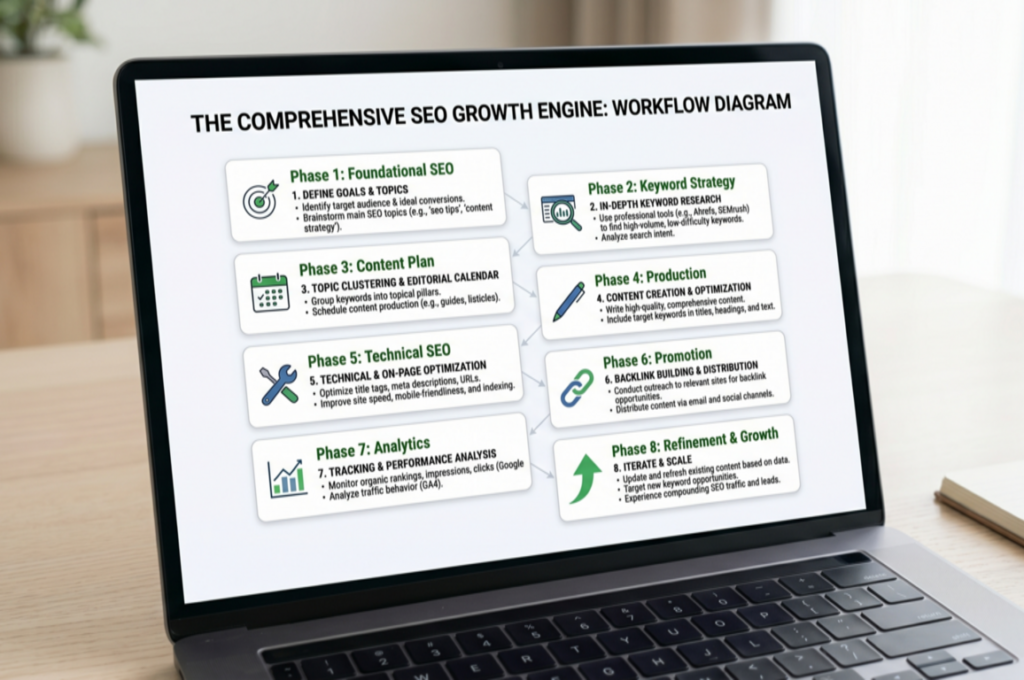
focus on seo (search engine optimization)
The most trusted way to increase the traffic to your website.
- Targeting the right keywords
- Matching search intent
- Optimizing your content properly
SEO might be time-consuming, but it is helpful in the long term.
Create content that solves real problems
Focus on quality rather than quantity.
Think for yourself:
- Does your blog answer a real question?
- Is it motivating the reader to take action?
When your content solves a problem, it becomes more valuable to the people, and they will click and stay.
improve internal linking
Internal links help search engines understand the website better.
It also helps users navigate the content through different blogs and pages.
For example:
- Linking one blog to another that is related
- Helping readers find similar content on a single website
This can increase engagement and improve SEO Performance.
optimizing for click-through rate (ctr)
Traffic depends on clicks
So focus on:
- Writing better titles
- Improving meta descriptions
- Making your content stand out in search results
Small improvements in CTR can significantly increase traffic.
Be consistent with publishing
Traffic will not be consistent from just one blog.
It will increase when you:
- Publish consistently
- Build a strong content base
- Cover topics in depth
Consistency builds momentum over time.
track and improve based on data
Beginners often make mistakes by not analyzing their website’s performance. They can use tools like:
- Google Search Console
- Analytics
To understand:
- Which pages get impressions
- Where clicks are low
- What needs improvement
Data can help to improve decision-making.
If you combine these strategies with the fixes that were discussed earlier. You’ll not only understand how to increase traffic to your website, but also build a system that keeps growing your traffic over time.
Key learnings
Traffic is not instant
A blog cannot guarantee results. SEO is a long-term game and needs consistency and patience.
fixing problems is more important than publishing more
Instead of publishing random content, focus on:
- Identify what’s not working
- Improve existing content
- Optimize strategically
search intent drives everything
Your content can be perfect, but if it doesn’t match the user intent and what users are actually looking for, that content doesn’t make sense. Understanding the intent is the key to gaining more clicks and rankings.
small optimizations make a big difference
Changes like:
- Improving titles
- Fixing structure
- Better keyword usage
Will significantly improve performance over time.
consistency builds long-term growth
The more the blog, structured content, and continuous improvement can increase traffic.
These learnings changed how I approach SEO.
Now, instead of focusing only on publishing, I focus on content that performs.
What i'll do next
Planning to increase the traffic to my domain through blogs and also build authority. So the processes are:
- Optimize existing blogs for better performance
- Improve titles and meta descriptions to increase CTR
- Monitor performance regularly using Google Search Console
- Build backlinks gradually to improve authority
- Continue publishing content consistently within my SEO cluster
Keep improving until the results arise.
conclusion
If the traffic is low, it doesn’t mean SEO is not working on your website. You have to focus on the clear strategy:
- The right keyword strategy
- Matching search intent
- Improving on-page SEO
- Optimizing for clicks
- And being consistent
By these, you can notice the traffic increase gradually.
The core takeaway is that:
Focus on the issue that prevents traffic from reaching your website. Once you do that, growth becomes much more predictable.
If you want to see how these strategies work in real time, you can check my SEO case study for beginners where I shared my actual results.
Frequently asked questions
How to increase traffic to your website ?
By creating a high value content that matches the user intent with a proper keyword strategy.
why is my blog not getting traffic ?
Because of a lack of search intent, a poor keyword strategy, and low CTR.
How long does it take to get website traffic ?
Initially, it will get you a few visitors. But for consistent traffic growth, it will take weeks to months.
Why do i have impressions but no clicks ?
Your content matches the search intent, but the meta titles and descriptions are weak.
How to fix low traffic on a website ?
Start analyzing the data using GSC, strategize keywords, structure content, optimize the content for SEO, and match the search intent.